
How to spend a night in Costa Rica’s Wildest Jungle – and wake up to the Roar of Howler Monkeys
Deep inside Costa Rica’s remote Osa Peninsula, mornings don’t begin with birdsong or sunlight filtering softly through the trees. They begin with a roar. It rolls through the jungle before dawn - loud, primal, almost prehistoric. The sound…
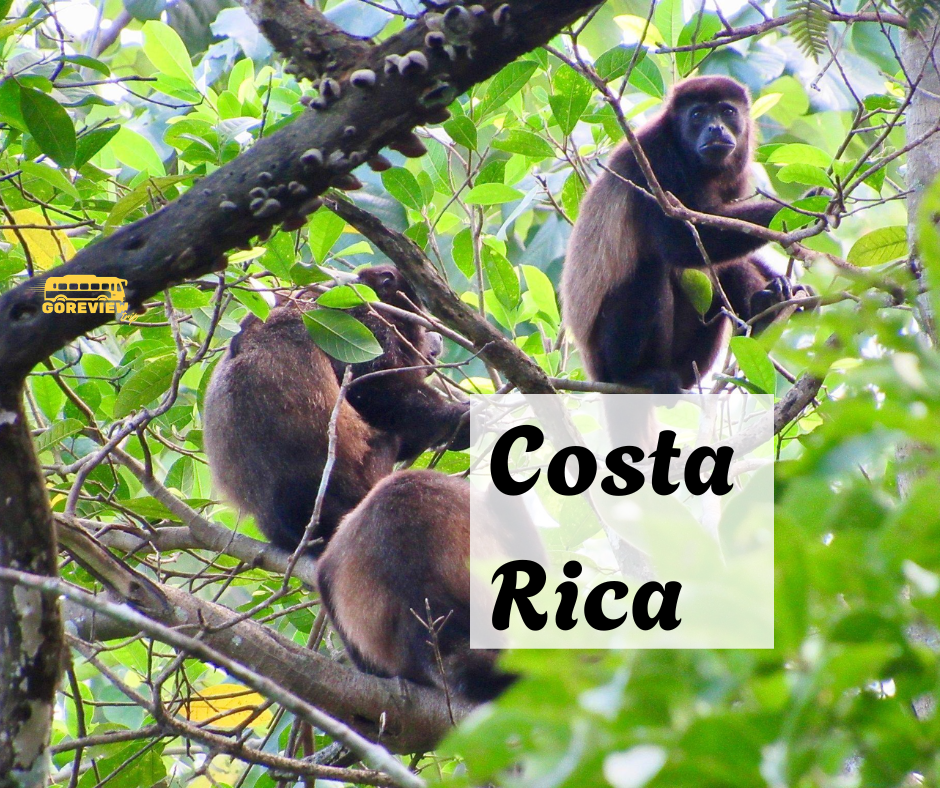
Deep inside Costa Rica’s remote Osa Peninsula, mornings don’t begin with birdsong or sunlight filtering softly through the trees. They begin with a roar.
It rolls through the jungle before dawn – loud, primal, almost prehistoric. The sound vibrates through giant ceiba trees, tangled vines, and the thick tropical air surrounding Corcovado National Park. For first-time visitors, it’s impossible not to freeze for a moment and wonder what kind of creature could make such a noise.
Then, somewhere high above the canopy, a branch shakes. A dark silhouette moves. Another roar erupts.
Howler monkeys are awake, and the rainforest is alive again.
Often described as one of the most biologically intense places on Earth, Corcovado National Park protects one of the last large stretches of Pacific lowland rainforest in Central America. Located on Costa Rica’s southwestern coast, the park is home to jaguars, tapirs, scarlet macaws, crocodiles, anteaters, four species of monkeys, and hundreds of birds, reptiles, and amphibians.
But unlike many tropical destinations crowded with tourists and luxury lodges, Corcovado still feels genuinely wild.
And for travelers willing to spend the night inside the jungle itself, it offers something increasingly rare in modern travel: true immersion in nature.
Sleeping Inside Corcovado National Park


Most visitors only experience Corcovado on guided day trips, arriving by boat in the morning before returning to the coast by afternoon. But a small number stay overnight at Sirena Ranger Station, a working conservation outpost hidden deep inside the park.
Getting there is part of the adventure.
Boats skim across the Pacific Ocean from Drake Bay before passengers jump into knee-deep water and walk ashore onto an isolated stretch of beach. From there, the rainforest immediately takes over. Cicadas scream from the trees, humid air clings to the skin, and every movement in the jungle seems amplified.
The trails around Sirena feel less like marked tourist paths and more like narrow openings through an ecosystem constantly reclaiming itself.
Within minutes, wildlife sightings become routine.
Spider monkeys swing effortlessly overhead. White-faced capuchins dart through branches searching for fruit. Bright scarlet macaws flash red and blue against emerald foliage. Tiny poison dart frogs hide among wet leaves while coatis patrol the forest floor like curious raccoons.
And everywhere, the sounds never stop.
The Wildlife Encounters That Make Corcovado Famous


Corcovado’s reputation comes largely from its extraordinary concentration of wildlife.
National Geographic once called the park “the most biologically intense place on Earth,” and walking its trails makes that description feel believable. Few places in Central America offer such a realistic chance of spotting large mammals in the wild.
Tapirs are among the park’s most iconic residents. These shy, heavy-bodied herbivores often emerge near rivers or beaches around dusk, quietly feeding on leaves and fallen fruit. Seeing one in the wild feels surreal — part pig, part elephant, entirely ancient.
Guides also keep watch for elusive jaguars and pumas, though sightings remain rare. More commonly encountered are anteaters, agoutis, crocodiles, caimans, and troops of monkeys moving noisily through the canopy.
Birdwatchers consider Corcovado a dream destination. More than 400 species have been recorded here, including toucans, trogons, king vultures, and the brilliantly colored scarlet macaw, one of Costa Rica’s conservation success stories.
At night, the jungle transforms again.
The darkness becomes complete except for flashlight beams cutting through the trees. Insects chirp relentlessly. Frogs call from hidden pools. Leaves rustle somewhere beyond sightlines, reminding visitors that they are merely guests inside a living wilderness.
Life at Sirena Ranger Station


Accommodation at Sirena Ranger Station is intentionally simple.
Guests sleep in open-air dormitories protected by mosquito nets, with shared bathrooms and basic meals served cafeteria-style. There’s no luxury spa, infinity pool, or air conditioning — and that’s precisely the appeal.
Evenings are spent listening to wildlife stories from local guides, watching the rainforest darken around the station, or quietly scanning nearby trees for movement.
Electricity is limited. Lights go out early. Wi-Fi barely exists.
Instead, visitors fall asleep to the sounds of the jungle itself.
The simplicity creates an experience that feels increasingly difficult to find elsewhere: uninterrupted connection with nature.
Without city noise or screens, every detail becomes sharper – the distant crash of ocean waves, the sudden call of a bird, the movement of creatures hidden just beyond the tree line.
For many travelers, this overnight stay becomes less about sightseeing and more about perspective.
Why Corcovado matters more than ever
Corcovado National Park is not only a travel destination – it’s one of the planet’s most important conservation areas.
The Osa Peninsula contains approximately 2.5 percent of the world’s biodiversity despite covering only a tiny fraction of Earth’s surface. Protecting this ecosystem has become increasingly important as climate change, deforestation, and habitat loss threaten wildlife populations across Central America.
Strict visitor limits help reduce environmental pressure. Only a controlled number of travelers may enter certain sections of the park each day, and overnight stays are carefully regulated.
This controlled access means Corcovado still feels raw and untouched compared with many other eco-tourism destinations.
It also means visitors experience something rare: silence, darkness, and wilderness on nature’s terms.
When to visit Corcovado National Park
The dry season, from December to April, offers the easiest hiking conditions and calmer ocean crossings. Trails are less muddy, wildlife spotting is excellent, and humidity is slightly lower.
The rainy season, from May to November, transforms the rainforest into an intensely green landscape filled with flowing rivers, dramatic storms, and fewer tourists. Wildlife remains active year-round, though trails can become challenging.
No matter the season, visitors should prepare for heat, humidity, rain, insects, and unpredictable conditions – all part of the authentic jungle experience.
A place that stays with you


As dawn returns to Corcovado, the jungle slowly brightens again.
Howler monkeys roar across the canopy. Scarlet macaws streak overhead. Mist rises from the forest floor while the Pacific Ocean crashes against the shoreline nearby.
The wilderness never truly sleeps here.
And perhaps that’s what makes an overnight stay in Corcovado unforgettable. It strips away modern distractions and replaces them with something far older and more powerful – the feeling of existing, briefly, inside one of Earth’s last truly wild places.

Continue exploring
Related field notes

Best Yacht Destinations: Where to Go by Yacht in 2026
If you are searching for Best Yacht Destinations, the right place can turn a simple boat rental into an unforgettable holiday. From…
Read the guide
Best Car Rental Deals: Why DiscoverCars Is a Top Choice for Comparing Rental Cars
Best Car Rental Deals are easier to find when you can compare prices, rental conditions, supplier ratings, and vehicle types in one…
Read the guide
Best Tour Guide 2026: Top Destinations & Tours with Amstar DMC
If you are looking for the Best Tour Guide for a Caribbean or Mexico vacation, Amstar DMC is worth considering for its…
Read the guide