
Bus vs Train vs Plane in Europe: Which Should You Choose for Your Trip?
Traveling around Europe often means choosing between bus, train, and plane travel, and the fastest-looking option isn't always the one that makes the most sense. A short flight may seem convenient until airport transfers and security time are…
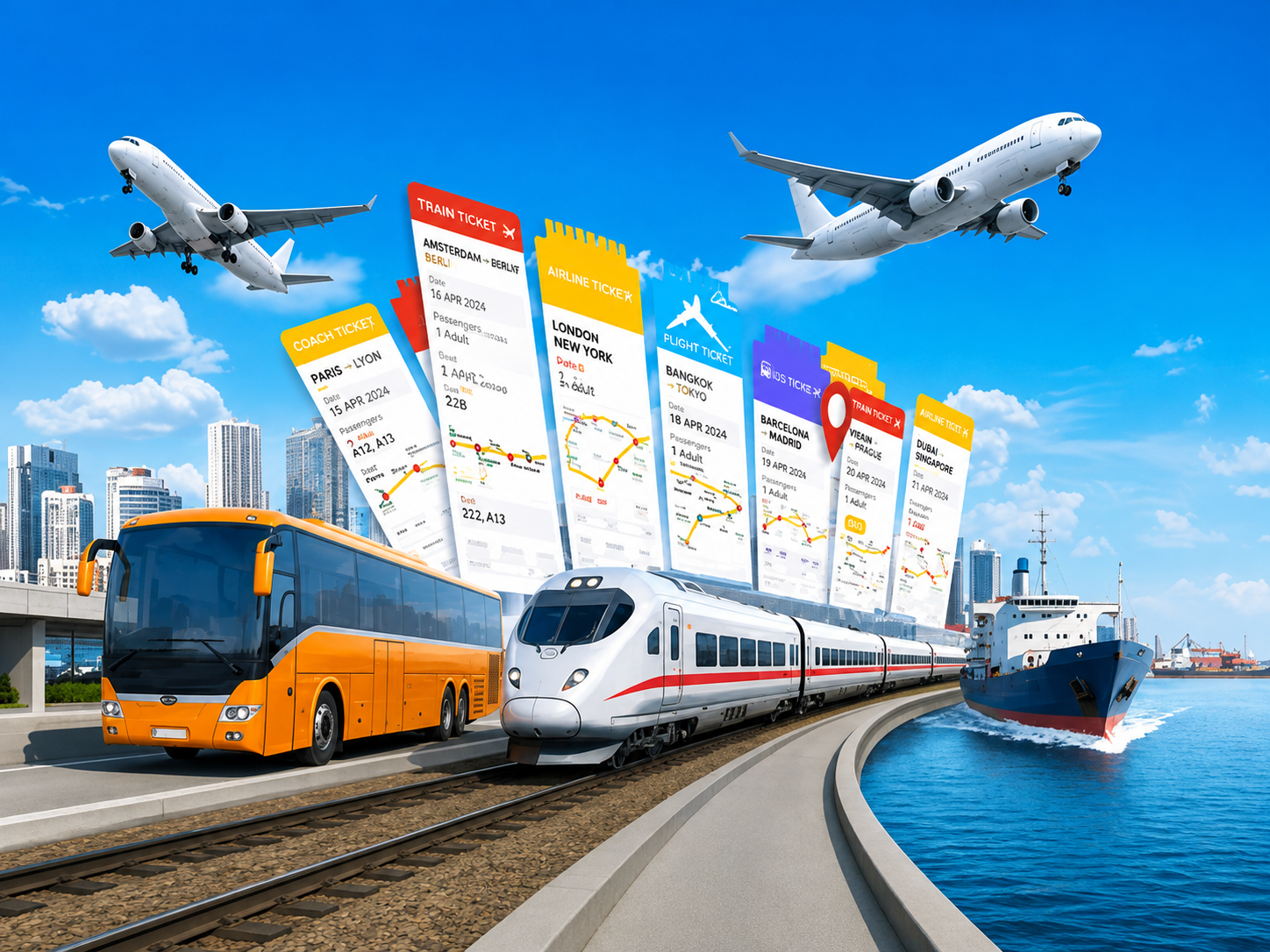
Traveling around Europe often means choosing between bus, train, and plane travel, and the fastest-looking option isn’t always the one that makes the most sense. A short flight may seem convenient until airport transfers and security time are added, while a train can take you directly between city centers. On another route, a coach may offer a simpler or more affordable connection.
Rather than choosing one type of transportation for your entire European trip, it often makes more sense to evaluate each journey separately.
That’s also where platforms such as INFOBUS become useful. Instead of focusing on just one transport type, INFOBUS brings coach, train, and airline tickets into one place, with available options depending on your departure point, destination, and travel date.
This guide looks at when each option makes sense, what to consider beyond the ticket price, and how to build a European itinerary around the journey rather than the transport.

Bus vs Train vs Plane at a Glance
There’s no universal winner. The right choice changes depending on how far you’re traveling, where the stations or airports are located, how much luggage you have, and how much of your day you’re willing to spend in transit.
| 🚌 Bus / Coach | 🚆 Train | ✈️ Plane | |
|---|---|---|---|
| Often useful for | Short–medium trips | City-to-city journeys | Longer distances |
| City-center access | Often good | Often excellent | Usually requires transfer |
| Airport transfer needed | No | No | Usually |
| Luggage process | Usually straightforward* | Often straightforward* | More restrictions likely* |
| Overnight travel | Available on some routes | Available on some routes | Less relevant |
| Main advantage | Coverage & potential value | Convenience | Long-distance speed |
*Rules vary by operator, ticket and route, so always check the conditions attached to the specific journey.
A useful rule is to avoid asking “Which transport is best in Europe?” Instead ask:
“Which transport works best for this particular journey?”
That small change in thinking can produce a much more practical itinerary.
When Taking the Bus Makes Sense

Coach travel can be particularly useful for short and medium-distance journeys, especially when a direct rail connection isn’t convenient.
It also tends to serve a broad range of destinations, making buses useful when your itinerary extends beyond major rail hubs.
Short and Medium-Distance Connections
For two relatively nearby cities, flying may add unnecessary airport time. A coach can offer a straightforward alternative, particularly when departure and arrival points are conveniently located.
The trade-off is journey time. For longer routes, spending several extra hours on a bus may not be worthwhile simply to save on the initial ticket price.
Overnight Travel
An overnight coach can turn transportation time into sleeping time.
You leave one city in the evening and arrive somewhere new the following morning, potentially saving valuable daytime hours. Whether that’s comfortable enough depends heavily on the traveler, vehicle, route, and operator.
If overnight travel interests you, compare arrival times carefully. Reaching an unfamiliar station at 4:30 a.m. may be less convenient than paying slightly more for a journey arriving at 7:00 a.m.
Filling Gaps in Your Itinerary
Bus travel becomes particularly useful when trains don’t connect two destinations directly.
This is one reason a multi-transport approach works well in Europe. You can use rail where it is convenient, then switch to a coach rather than forcing the entire itinerary to fit the railway network.
A coach is worth checking first when: you’re traveling a relatively manageable distance, prioritizing budget, considering an overnight journey, or heading somewhere without a convenient direct rail connection.
For travelers specifically interested in coach travel, our INFOBUS.BY | Top 5 Popular Bus Routes to Book in 2026 takes a closer look at individual routes.
When the Train Is the Better Fit

For many European city-to-city journeys, the biggest advantage of rail isn’t necessarily speed. It’s where the journey begins and ends.
Major railway stations are frequently located within or close to city centers. That can remove two extra stages from the trip:
City → Airport → Flight → City
becomes:
City → Train → City
This difference matters more than it initially appears.
You’re connecting cities with a convenient direct rail service, want to avoid airport formalities, or simply prefer watching the landscape change rather than flying over it.
Rail can also make travel days feel more like part of the holiday. Instead of organizing your day around getting to an airport, you may be able to leave from a central station and arrive close to your next hotel or attraction.
That doesn’t automatically make trains faster or cheaper. Some routes involve transfers, and ticket prices can vary considerably according to timing, operator, and fare conditions.
The important thing is to compare the whole journey, not just the number printed beside the ticket.
When Flying Actually Saves Time

Flights become increasingly attractive as the distance between destinations grows.
If you’re moving from one side of Europe to another and only have a week-long holiday, spending most of a day on ground transportation may not be the best use of your time.
Flying is especially worth checking when:
- the destinations are far apart;
- a direct flight is available;
- your itinerary is time-sensitive;
- airport connections at both ends are manageable.
However, a 90-minute flight isn’t a 90-minute journey.
You still need to consider getting to the airport, arriving early enough for departure procedures, passing through security, collecting luggage where applicable, and traveling from the destination airport into town.
That’s why the next comparison is much more useful than looking at scheduled transport time alone.
Compare Door-to-Door Time, Not Just Ticket Time
Imagine you’re choosing between a 1½-hour flight and a 5-hour train.
At first glance, flying wins easily.
But an illustrative flight journey could look something like:
45 min — travel to airport
2 hrs — check-in, security and waiting
1 hr 30 min — flight
30 min — arrival and luggage
45 min — transportation into the destination
Total: approximately 5½ hours
Meanwhile, a five-hour train could take you from one central station directly to another.
This is only an example—the real numbers depend entirely on your route—but it demonstrates why comparing scheduled journey times can be misleading.
For a short flight, ground transportation and airport procedures may eliminate much of the apparent time advantage. For a much longer journey across Europe, however, flying can still save many hours.
One Trip Doesn’t Need One Type of Transport
This is where planning becomes more interesting.
Imagine an itinerary connecting several European cities. The first two may have an excellent railway connection. The next destination might be easier to reach by coach. Then the final leg could be far enough away that flying makes much more sense.
Your trip might therefore look like: City A → 🚆 Train → City B → 🚌 Coach → City C → ✈️ Plane → City D
There’s no reason to identify yourself as a “train traveler” or “bus traveler” before you’ve even looked at the individual routes.
INFOBUS takes a similar multi-transport approach. Its booking platform includes three main ticket categories:
Coach tickets · Train tickets · Airline tickets
You enter your departure point, destination, and travel date, and the available journeys depend on that search rather than requiring every trip to use the same mode of transportation.
The Cheapest Ticket May Not Be the Cheapest Journey

Price comparisons can be just as misleading as journey-time comparisons.
Imagine finding:
Flight – €30
versus
Train – €50
It’s tempting to conclude that flying saves €20.
But the real calculation should be closer to:
Ticket price
- Luggage
- Seat or booking extras
- Transport to departure point
- Transport from arrival point
= Actual journey cost
A low airfare can remain the cheapest option after all of these are included but not always.
The same principle applies to buses and trains. Don’t choose a ticket simply because the first number displayed is lower. Look at what the fare includes and what you’ll still need to pay for afterward.
Luggage Can Change the Decision Too

Luggage deserves particular attention when comparing transport types because there is no single allowance that applies to every INFOBUS booking.
INFOBUS is a ticket aggregator rather than the company physically operating each journey. Baggage conditions therefore depend on the carrier behind your specific ticket.
Typical coach allowances may include a small carry-on and a larger checked bag, but you shouldn’t assume those limits apply to your journey.
Check the actual carrier conditions before payment, particularly if you’re traveling with:
- large suitcases;
- sports equipment;
- multiple bags;
- oversized items;
- additional hand luggage.
This becomes even more important when comparing a seemingly inexpensive airline ticket with a coach or train fare.
How Booking Through INFOBUS Works
If you decide to check different transportation options, INFOBUS keeps the booking process relatively straightforward.
Step 1 – Search
Enter your departure point, destination, and travel date.
Step 2 – Compare
Review the available routes, schedules, and carriers for your search.
Step 3 – Add Passenger Details
Enter the information required for the traveler or travelers.
Step 4 – Pay Online
Complete payment using one of the available methods.
Step 5 – Receive Your Ticket
Your e-ticket is delivered electronically and can also be accessed through your INFOBUS account.
INFOBUS supports major payment methods including Visa, Mastercard, Maestro, Visa Electron, PayPal, and Google Pay, while additional local methods may be available depending on the country or carrier.
Travelers can also use the INFOBUS: Bus, train, flight mobile app for booking and accessing travel information on the go.
For a more detailed examination of the booking platform itself, see our INFOBUS | The Smartest Way to Book European Travel 2026 review.
A Simple Decision Guide: What Should You Check First?
By this point, the answer to bus vs train vs plane in Europe should be clear: there isn’t one transport type that wins every journey.
Instead, start with your route and priorities.
| Your Situation | Transport to Check First |
|---|---|
| Traveling between nearby European cities | 🚌 Bus / 🚆 Train |
| Direct city-center connection available | 🚆 Train |
| Keeping the ticket budget low | 🚌 Bus, then compare |
| Traveling a long distance across Europe | ✈️ Plane |
| Traveling overnight | 🚌 Bus / 🚆 Train |
| Carrying several bags | 🚌 Bus / 🚆 Train, then check allowance |
| Short on vacation time | 🚆 Train / ✈️ Plane |
| Not sure which option works | Compare all three |
Notice that this table says “check first,” not “choose.” Routes, schedules, fares, luggage policies, and connection times can completely change the answer.
A train might normally make sense for a medium-distance journey but require two inconvenient transfers on your particular date. A direct coach could then become more practical. Likewise, a flight may be worthwhile for a longer journey but less attractive once airport transfers are factored in.
Example: Building a Multi-Transport Trip Across Europe

One of the easiest ways to understand this approach is to imagine a trip through several European cities.
Instead of deciding in advance that you’ll travel exclusively by train or bus, evaluate every leg separately.
Prague → Vienna
Start by checking the train.
These cities are close enough that ground transportation makes sense to investigate before flying. You can then compare available rail and coach schedules based on your actual travel date.
Vienna → Budapest
Compare train and coach options.
Both can fit naturally into a multi-city itinerary, so departure time, arrival location, journey duration, and fare conditions may matter more than the transport type itself.
Budapest → Rome
Start by checking flights.
The distance is much greater, so flying deserves consideration—especially on a shorter holiday. You can still compare alternatives if time is less important than budget or the experience of traveling overland.
Rome → Florence
Check rail connections first.
For two destinations with convenient city-to-city rail options, flying would usually add airport logistics that aren’t necessary for such a journey.
Put together, the trip could look like this:
Prague ── 🚆 Train ──→ Vienna ── 🚌 Coach ──→ Budapest ── ✈️ Plane ──→ Rome ── 🚆 Train ──→ Florence
This isn’t a fixed itinerary or a recommendation that you must use those exact transportation types. The point is that the most practical mode can change from one leg to the next.
INFOBUS supports this style of planning by offering coach, train, and airline ticket searches from the same platform. If you’re planning a larger multi-city journey, you can also read our Traveling Across Europe Made Easy with INFOBUS guide for more trip-planning ideas.
Don’t Choose the Transport Before You Choose the Route

A common way to plan a European holiday is:
“We’re going to travel Europe by train.”
There’s nothing wrong with that if rail travel itself is part of the experience. But if convenience, cost, or travel time matters more, deciding on the transport before the itinerary can unnecessarily limit your options.
Try reversing the process:
1. Choose where you want to go.
2. Decide when you want to travel.
3. Compare the available connections.
4. Choose the transport that works for that particular leg.
That way, the itinerary determines the transportation not the other way around.
What to Check Before Booking Any Ticket
Whether you’re traveling by coach, train, or plane, don’t stop at the departure time and ticket price.
A quick check of the details can prevent an inconvenient connection from becoming obvious only after you’ve paid.
Departure and Arrival Points
Check the exact station, terminal, or airport, not just the city name.
A ticket showing London, Paris, Rome, or another major city doesn’t necessarily mean you’ll arrive in the center. The cost and time required to reach your accommodation should be part of your comparison.
Luggage Conditions
Don’t assume baggage allowances are the same across different journeys.
INFOBUS acts as a ticket aggregator, while the actual transportation is provided by individual carriers. Luggage allowances and additional fees can therefore vary.
This is particularly important when a low-cost flight appears much cheaper than the train or coach.
Connections
A lower fare becomes less appealing if it requires several awkward transfers.
Check:
- Number of transfers
- Time between connections
- Change of station or terminal
- Arrival time
- Total journey duration
A slightly more expensive direct journey may be worth considering if it saves several hours or removes a difficult connection.
Changes and Cancellations
Ticket conditions also vary.
INFOBUS allows cancellation requests to be initiated through the user’s account, confirmation email, or customer support, but refund eligibility and applicable fees depend on the carrier’s conditions.
If your itinerary may change, check those rules before paying rather than assuming every ticket offers the same flexibility.
Booking Different Transport Types with INFOBUS

Once you’ve decided which connections are worth comparing, booking through INFOBUS follows the same basic process regardless of whether you’re searching for a coach, train, or flight.
Step 1: Enter your departure point, destination, and date.
Step 2: Review available routes, schedules, and carriers.
Step 3: Add passenger information.
Step 4: Complete payment online.
Step 5: Receive your e-ticket by email and access it through your INFOBUS account.
Accepted payment methods include major cards as well as PayPal and Google Pay, with some additional payment options varying by country or carrier.
Travelers who prefer managing journeys from their phone can also use the INFOBUS: Bus, train, flight app.
Another feature of the platform is its bonus system, through which eligible bookings can earn bonuses toward future trips. However, the more relevant advantage for this particular type of itinerary is simply having access to multiple transportation categories without limiting your search to buses, trains, or flights alone.
For a more detailed breakdown of the platform, booking experience, and its strengths and limitations, see our INFOBUS | The Smartest Way to Book European Travel 2026 review.
FAQs
Is it better to travel Europe by bus or train?
Neither is automatically better. Trains can be particularly convenient for direct city-center connections, while coaches may provide useful alternatives for certain routes and budgets. Compare the actual schedule, journey duration, arrival point, and fare for each leg of your trip.
Is flying cheaper than taking the train in Europe?
It can be, but compare the total cost rather than the advertised fare alone. Airport transportation, baggage, seat selection, and other extras can change the final cost. The opposite can also happen, so it’s worth checking both options for longer routes.
Are overnight buses worth considering?
Yes, particularly if you’d rather travel while you sleep and preserve your daytime for sightseeing. However, comfort varies by vehicle and operator, and very early arrival times can be inconvenient. Check the complete schedule before choosing an overnight service.
Can I combine buses, trains, and flights on one European trip?
Yes. In fact, combining transportation types can be one of the most practical ways to build a multi-city itinerary. Choose the most suitable option for each journey rather than committing to one mode for the entire trip.
Can I search buses, trains, and flights with INFOBUS?
Yes. INFOBUS offers coach, train, and airline tickets, although the journeys displayed depend on the departure point, destination, date, and available carriers.
Final Thoughts

The bus vs train vs plane debate doesn’t need a winner.
For a short city-to-city connection, rail might be the first option worth checking. A coach could make more sense for the next destination, while a flight may save valuable time when your itinerary crosses a much greater distance.
What matters is the complete journey: not just the ticket price or scheduled travel time, but also transfers, luggage, arrival location, flexibility, and how much of your day the journey actually uses.
Instead of building your European trip around one type of transport, build it around the places you want to experience, and choose how to travel one connection at a time.

Continue exploring
Related field notes

Best Yacht Destinations: Where to Go by Yacht in 2026
If you are searching for Best Yacht Destinations, the right place can turn a simple boat rental into an unforgettable holiday. From…
Read the guide
Best Tour Guide 2026: Top Destinations & Tours with Amstar DMC
If you are looking for the Best Tour Guide for a Caribbean or Mexico vacation, Amstar DMC is worth considering for its…
Read the guide
Cheap Flights: Best Affordable Destinations to Fly From Australia
Cheap Flights can turn an ordinary travel plan into a surprisingly affordable Cheap Flights getaway when you choose the right destination and…
Read the guide