
Why Albania is Europe’s most underrated summer escape in 2026
For years, travelers chasing Mediterranean sunshine have flocked to Italy, Greece, and Croatia. But just across the Adriatic Sea, another destination has quietly been building a reputation among backpackers, digital nomads, and road-trippers who prefer authenticity over overcrowded…
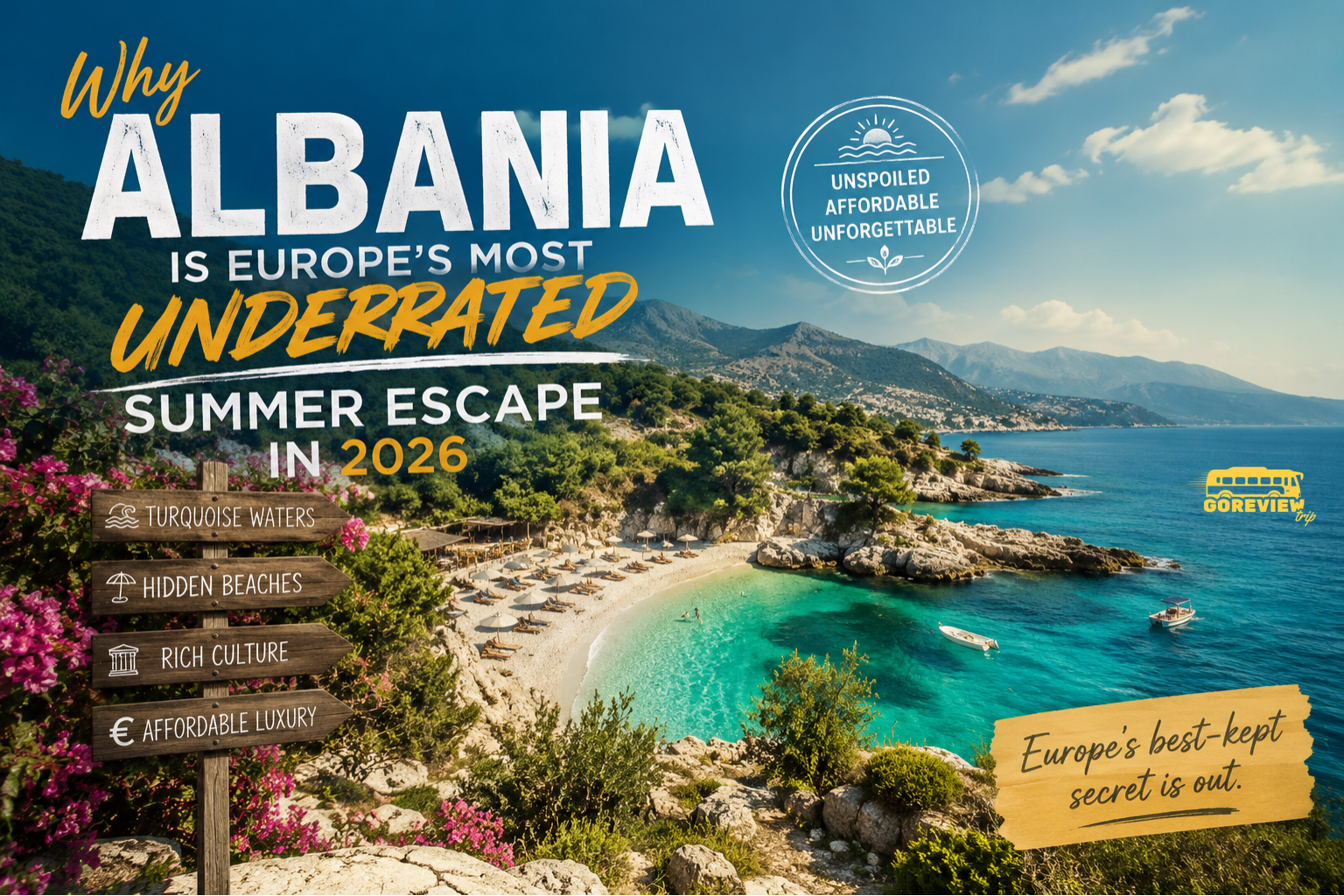
For years, travelers chasing Mediterranean sunshine have flocked to Italy, Greece, and Croatia. But just across the Adriatic Sea, another destination has quietly been building a reputation among backpackers, digital nomads, and road-trippers who prefer authenticity over overcrowded hotspots.
That place is Albania.
Still refreshingly affordable and dramatically less touristy than many of its neighbors, Albania combines turquoise beaches, rugged mountain roads, Ottoman-era towns, and a café culture that feels both Mediterranean and distinctly Balkan. In 2026, with rising prices across Europe and travelers increasingly searching for “hidden gems,” Albania is quickly becoming one of the continent’s most exciting destinations.
And the best part? Much of the country still feels undiscovered.
The Albanian Riviera feels like Greece 20 years ago
The first thing most travelers notice about Albania is the water.
Along the Albanian Riviera, the Ionian Sea glows in impossible shades of blue. Small beach towns sit between dramatic mountain cliffs, and winding coastal roads reveal hidden coves that rarely appear on mainstream travel itineraries.
Places like Ksamil, Himarë, and Dhërmi have become favorites among travelers looking for Mediterranean beauty without Mykonos-level prices.


Ksamil, near the Greek border, is famous for its white-sand beaches and tiny offshore islands reachable by paddle boat or kayak. During peak summer months, the atmosphere becomes lively but still feels noticeably calmer than many resort-heavy Mediterranean destinations.
Further north, Himarë offers a slower pace. Stone houses, family-run seafood restaurants, and sunset cafés give the town a relaxed charm that keeps many visitors staying longer than planned.
Dhërmi, meanwhile, blends beach culture with nightlife. By day, travelers swim in crystal-clear coves; by night, seaside bars fill with music and travelers from across Europe.
Albania rewards road trips more than package tours
One reason Albania feels different from much of Europe is that the country still favors independent travelers.
Driving through Albania is part of the experience itself. Coastal highways twist along mountain cliffs, villages appear unexpectedly between olive groves, and roadside cafés often serve homemade mountain tea or grilled seafood for surprisingly low prices.
This is why campervan travel and self-drive itineraries are growing rapidly in popularity across the Balkans.
Travelers exploring Albania frequently combine rental services like QEEQ, Go Car Rental, Localrent, or campervan-focused options such as Go Campers when planning broader Balkan road trips through Montenegro, Kosovo, and northern Greece.


The famous Llogara Pass is one of the country’s most unforgettable drives. The mountain road climbs dramatically above the Ionian coastline before descending toward the Riviera, with viewpoints that make nearly every traveler stop for photos.
Unlike heavily commercialized European destinations, Albania still delivers the feeling of spontaneous discovery – the kind of travel experience people increasingly crave in the TikTok and Instagram era.
Beyond the beaches, Albania has deep cultural roots
Many first-time visitors arrive for the coastline and leave surprised by Albania’s history.
The UNESCO-listed city of Berat, often called the “City of a Thousand Windows,” is one of the country’s most beautiful cultural destinations. White Ottoman houses climb the hillside beneath an ancient castle where locals still live within stone walls centuries old.


Further south, Gjirokastër feels almost cinematic, with cobbled streets, fortress views, and slate-roofed homes spilling down steep hillsides.
These towns reveal another side of Albania – one shaped by Ottoman influence, communist history, and centuries of resilience. For travelers interested in culture rather than only beaches, they add depth to any Albanian itinerary.
Albanian food is still one of Europe’s best-value experiences
Food is another reason travelers fall unexpectedly in love with Albania.
Mediterranean seafood, Balkan grilled meats, mountain herbs, homemade yogurt, and strong local coffee all shape the country’s cuisine. In coastal towns, it’s still possible to enjoy fresh seafood dinners at prices that feel almost impossible compared to Western Europe.
Popular dishes include:
- Tavë kosi (baked lamb with yogurt)
- Byrek (savory pastry filled with cheese or spinach)
- Grilled octopus and sea bass along the Riviera
- Fërgesë, a rich pepper-and-cheese dish popular in central Albania
Local hospitality also leaves a strong impression. Family-owned guesthouses remain common, and travelers are often welcomed with homemade raki or fresh mountain tea.
Why Albania could go viral in 2026
Albania sits at the perfect intersection of several major travel trends:
- Travelers want affordable European destinations
- Road trips and campervan travel continue growing
- Hidden gems outperform mainstream destinations on social media
- Nature-focused travel is becoming more desirable
- Gen Z and millennials increasingly prioritize authenticity
And Albania delivers all of it.
What makes the country especially compelling is that it still feels early. Unlike destinations already transformed by mass tourism, Albania retains unpredictability and rawness — qualities many travelers feel Europe has gradually lost elsewhere.


For now, Albania remains one of the few Mediterranean destinations where travelers can still stumble upon nearly empty beaches, family-run cafés, and mountain villages untouched by large-scale tourism.
But probably not for much longer.

Continue exploring
Related field notes
Best Car Rental Deals: Why DiscoverCars Is a Top Choice for Comparing Rental Cars
Best Car Rental Deals are easier to find when you can compare prices, rental conditions, supplier ratings, and vehicle types in one…
Read the guide
Best Tour Guide 2026: Top Destinations & Tours with Amstar DMC
If you are looking for the Best Tour Guide for a Caribbean or Mexico vacation, Amstar DMC is worth considering for its…
Read the guide
Cheap Flights: Best Affordable Destinations to Fly From Australia
Cheap Flights can turn an ordinary travel plan into a surprisingly affordable Cheap Flights getaway when you choose the right destination and…
Read the guide